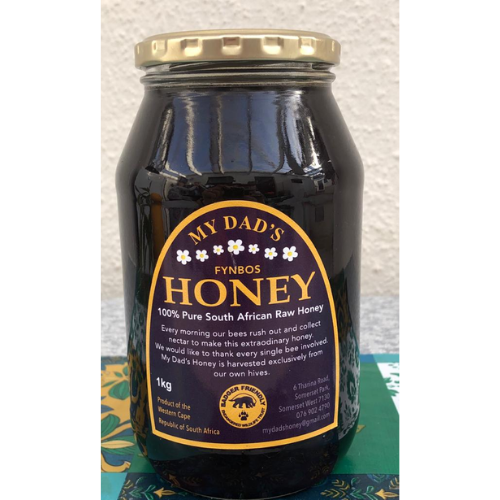
We offer Fynbos, Eucalyptus, as well as Creamed honey for sale.
Fynbos Honey
Fynbos comes from the Afrikaans for “fine bush”. This refers to its small leaves. People have used Fynbos for a variety of reasons. The Dutch settlers used it as thatch for their housing. It also has healing properties. The popular rooibos tea is also made from fynbos. The nectar of Fynbos makes a beautifully sweet honey.
Fynbos can only be found in South Africa, making it one of our ecological treasures.
Eucalyptus Honey
Eucalyptus produces a beautiful, bright honey. Not only is it great on toast, but it is also a sweet treatment for a cold or flu due to its wholesome qualities.
The bees create it from the nectar of the Eucalyptus Cladocalyx (or sugar gum) which grows in abundance in the Western Cape.
Harvesting is usually from December to April/May but this all depends on the rainfall as gum trees love water.
Creamed Honey
Creamed honey is called creamed because of its colour, not because anything has been added to it. It is still 100% pure raw honey. We have thought about changing the name to “whipped honey” or canola honey to avoid confusion. However, it is most well-known as “creamed honey”.
How is it made?
The hives are put into the canola fields because canola flowers are packed with nectar which makes the bees very strong for pollination. Canola is the crop with yellow flowers that you see growing for everywhere with the wheat in the Overburg and Malmsbury areas. It is harvested for oil for margarine and cooking oil and the foliage is used for fodder feed.
In order to extract the canola honey, the hives are brought to the Bee Room, which is our processing centre. The frames are taken out quickly and put into a centrifugal drum. The frames are spun to get the honey out before it crystallizes.
Canola honey crystals are large and the honey solidifies into a hard mass. This makes it an ideal candidate for creaming. We store the honey in big buckets until we need it for creaming.
When it is time for creaming, we soften it in the sun or warmers that we have in the Bee Room. These warmers are old deep freezes with thermometers in and light bulbs which heat the honey to the temperature of the hive.
It is then transported to my kitchen where Linder and I beat it in the Kenwood. This beating breaks down the crystals and renders it into a smooth paste. The paste has the consistency of peanut butter and is easily spreadable.
We bottle and label the honey and store it in our fridge until we need it for a sale.


